How to Track Net Worth and Property Equity Without the Cloud
Your net worth is highly sensitive data. Here's how to track it securely on your own machine.
Tracking your net worth requires aggregating highly sensitive data: your bank balances, your stock portfolios, your retirement accounts, and the equity in your home. Putting all of this into a single cloud dashboard creates a honeypot of your financial life.
Fortunately, you don't need the cloud to track your wealth effectively. Here is how you can manage complex assets entirely offline using Covely.
Setting Up Asset Accounts
Unlike basic budgeting apps that only understand checking accounts and credit cards, a proper wealth management OS supports distinct asset classes.
- Liquid Assets: Cash, checking, savings.
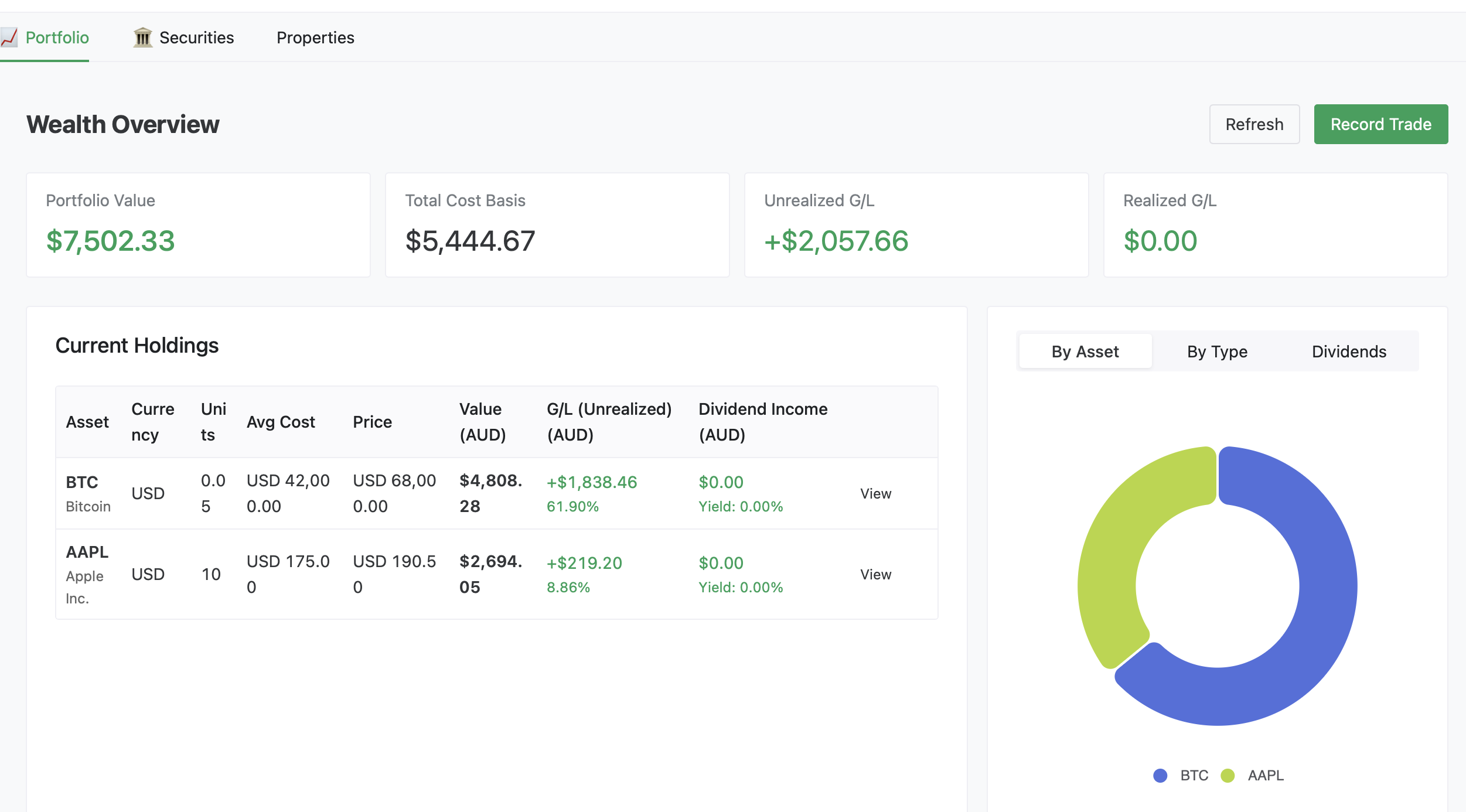
- Market Assets: Stocks, ETFs, mutual funds.
- Fixed Assets: Real estate, vehicles, physical gold.
Tracking Real Estate Equity
To accurately track a property (like your primary residence), you need to represent both the asset value and the liability (the mortgage) accurately.
- Create a Fixed Asset account for your home's estimated market value.
- Create a Liability account for your mortgage balance.
- When you make a mortgage payment, split the transaction: part of it pays down the liability (increasing your net worth), and part goes to interest (an expense).
Covely's dual-entry system handles this automatically, updating your net worth in real-time as you pay down debt.
Multi-Currency and Foreign Exchange
If you hold assets in different currencies (e.g., a foreign bank account or international stocks), Covely allows you to assign specific currencies to accounts and automatically normalizes your total net worth into your base currency.
Comprehensive Wealth Reporting
Tracking the raw numbers is only half the battle. To truly understand your financial position, you need powerful reports to visualize your wealth trajectory. Covely's Report Hub includes several dedicated wealth tracking tools:
- Net Worth Balance Sheet: The ultimate snapshot of your financial health. This report aggregates all your asset accounts and subtracts all your liabilities, giving you a clear, top-level view of your total net worth at any specific point in time.
- Asset Allocation Report: Essential for portfolio management. This visualizes the percentage breakdown of your wealth across different classes (e.g., how much of your net worth is locked in real estate versus liquid cash or market investments), ensuring you aren't over-leveraged in one area.
- Income Statement (P&L): While the balance sheet shows what your net worth is, the Income Statement shows why it is changing. By tracking your net income over time, you can see exactly which expenses are dragging down your wealth accumulation.
By keeping all this data offline, you gain the analytical power of a family office without exposing your total net worth to data brokers.